

Progress toward sustainable and inclusive cities in Belarus is closely linked to the strength of partnerships that mobilize resources, expertise and local action. Accessibility and inclusion, particularly for persons with disabilities, women, youth, migrants and groups at risk of exclusion, have emerged as cross-cutting priorities.
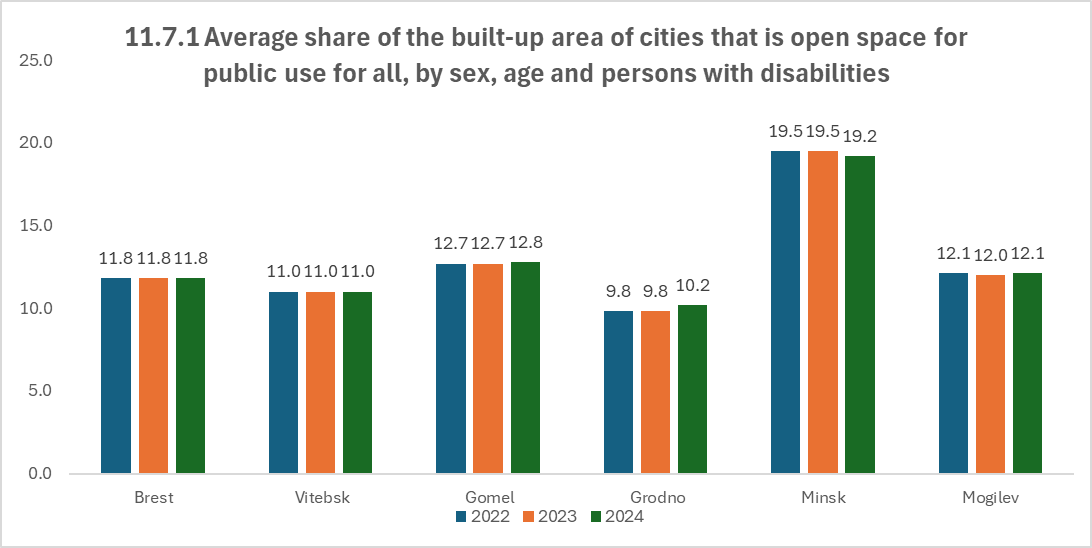
Globally agreed SDG indicators point to the need to improve accessibility of public spaces, transport and services for all population groups, while also addressing urban-rural disparities. SDG target 11.7 emphasizes not only the availability of public spaces but also their safety, inclusiveness and accessibility for all. Indicator 11.7.1, measuring the share of urban areas allocated to public spaces, provides one entry point for assessing accessibility. Experience in Belarus shows that progress depends not only on the number of public spaces but on their design, management and governance. Barrier-free access, adaptive facilities and easy navigation are essential to ensure that public spaces serve all equally.
In 2025, Belarus marked a milestone for SDG target 11.7 and will be publishing the first time the national indicator 11.7.2, measuring the proportion of women aged 18–69 years who experienced non-sexual or sexual harassment in the previous 12 months. This indicator is based on a national household sample survey conducted in 2024 by the National Statistical Committee, with technical support from UNFPA and UN Women. This data establishes a baseline for understanding women’s safety in public and private spaces, reinforcing that accessibility presupposes freedom from violence and harassment.
At the same time, progress under SDG 11 has been supported by strengthened partnerships reflected particularly in 17.14.1, as collaboration between national and local authorities, UN agencies, civil society and communities.
Belarus has made significant progress in SDG implemention with an overall progress rate exceeding 82 per cent, according to national estimates. Over 85 per cent progress is reported on SDGs 1 (No Poverty), 8 (Decent Work and Economic Growth), 9 (Industry, Innovation and Infrastructure), 10 (Reduce inequalities) and 11 (Sustainable Cities and Communities). SDGs 13 (Climate Action) and 14 (Life Below Water) are considered as fully achieved. Further improvement is still needed under SDGs 3 (Good Health and Well-Being), 6 (Clean Water and Sanitation), 12 (Responsible Consumption and Production) and 17 (Partnerships for the Goals).
Belarus also faces challenges, especially in population ageing (aging rate increased from 105.4 per cent in 2024 to 112.6 per cent in 2025), domestic violence and technology facilitated violence, urban-rural divides (for example, access to quality services and modern infrastructure) and gaps in inclusion of persons with disabilities (unemployment rate among persons with disabilities aged 18–74 years was 12 per cent in 2024). Addressing these intersecting complexities requires a comprehensive approach that combines infrastructural investment with coordinated policy action and robust data. A dedicated database of regional SDG indicators was developed by the National Statistical Committee, supported by UNFPA, to effectively monitor progress at the local level.
In 2025, UN Belarus, led by UNDP, supported 21 local SDG pilot initiatives across all six regions through a joint project on SDG localization. Implemented in partnership with national and local authorities and civil society, these initiatives focused on creating accessible environments, inclusive learning opportunities and employment pathways for persons with disabilities.
A total of 4,903 people (1,421 men and 3,482 women), including 693 persons with disabilities, participated in these SDG pilot initiatives. Local partnerships brought about practical innovations, including Belarus’ first inclusive coffee training center in Mozyr, combined with employment opportunities in the food service sector for graduates of a special boarding school for persons with mental disabilities in Pinsk. Digital inclusion was strengthened through training in animated video production in Grodno and 3D printing in Luninets, alongside the development of an online platform for persons with disabilities and their families. These pilots illustrate how partnerships translate SDG principles into tangible community-level outcomes.
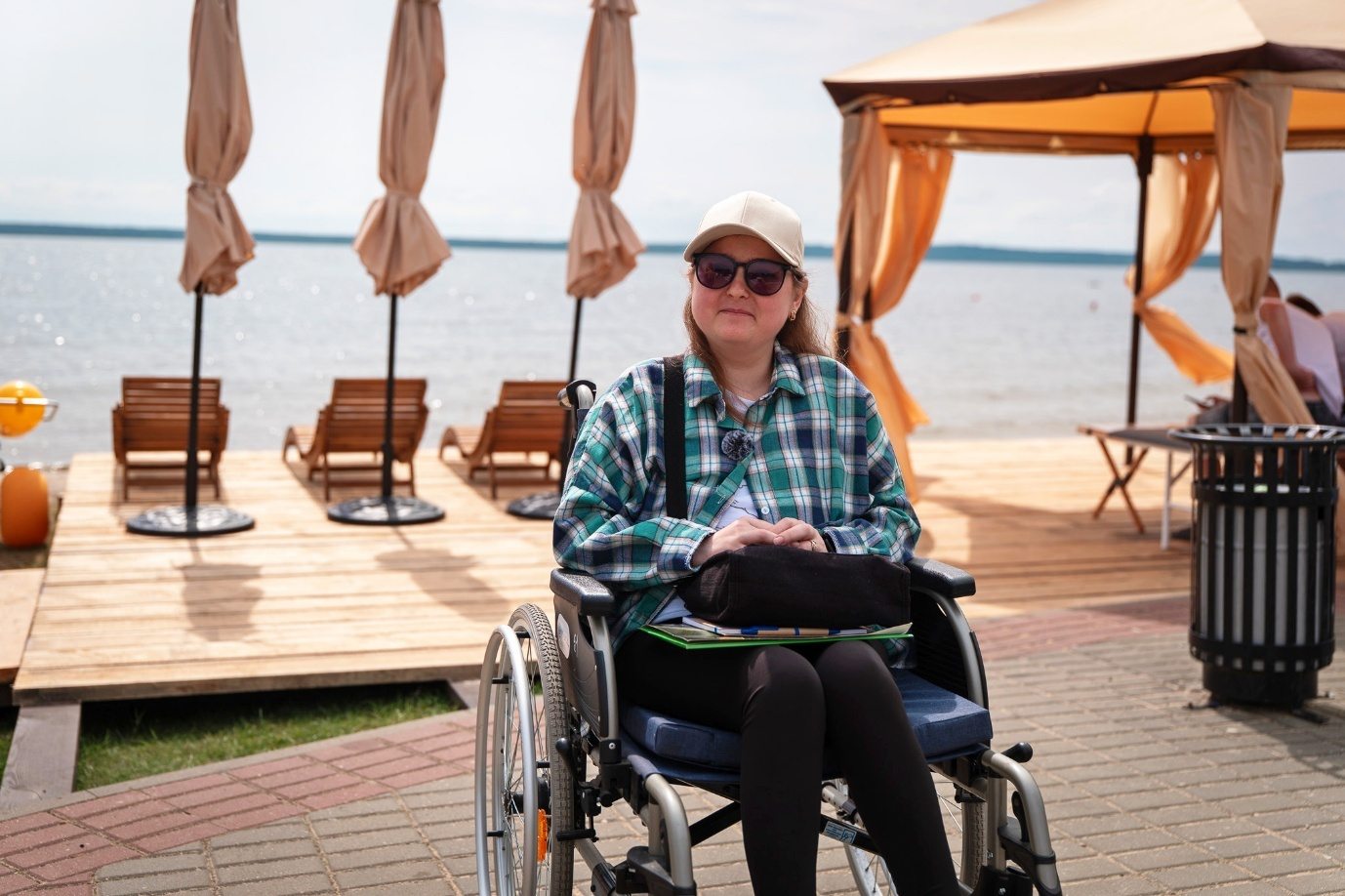
Partnerships have also expanded access to public and recreational spaces, contributing directly to SDG target 11.7. In Braslav district, an important tourism area, inclusive beaches and accessible tourist routes were developed, enabling persons with disabilities and older persons to participate more fully in cultural and recreational life. In the Brest region, an inclusive sports and workout area was established for residents with mental disabilities, supporting physical activity, social interaction and wellbeing.
Inclusive approaches extend beyond urban design. Through collaboration with IOM, disability inclusion has been integrated into humanitarian assistance for migrants, including clear-language information, accessible feedback mechanisms and tailored support, such as mobility aids and medical escorts. These actions reinforce social cohesion and demonstrate that accessibility is integral to essential services, not an add-on.
UNFPA-led partnerships complement these efforts by addressing safety and violence prevention, supporting women who have experienced domestic violence, engaging youth through inclusive communication platforms, promoting dialogue on accessibility and conducting nationwide webinars on universal design. Plain-language tools further help ensure that young people with mental disabilities can access critical information and services.
Together, these partnership-driven initiatives have strengthened accessibility, safety, participation and awareness at the local level. Communities have gained more inclusive public spaces, services and skills development opportunities, while women, persons with disabilities, youth, migrants and their families benefit from safer environments and greater visibility in community life.
Sustainable and accessible cities depend on partnerships that connect national strategies with local action and infrastructure development with data, safety and social innovation. In Belarus, collaboration between government institutions, UN agencies, civil society and communities has proven effective in piloting inclusive solutions that can be adapted and scaled.
As the UNECE region advances towards 2030, this experience highlights the value of partnership-based SDG localization in transforming cities into spaces where all people, regardless of ability, age, gender or status, can participate, contribute and thrive.
United Nations Economic Commission for Europe
Palais des Nations, Geneva


