

Robust, disaggregated data on all social, economic and environmental topics, gathered in accordance with a human rights-based approach, are essential to measure progress and gaps across the SDGs. Partnerships between national statistical systems and national human rights institutions (NHRIs) contribute directly to SDG 17, Partnerships for the Goals, by bringing together complementary mandates. NSOs bring the technical expertise and quality standards of official statistics, while NHRIs bring the substantive knowledge and commitment to ensure attention to rights holders, equality and accountability.
Through Memorandums of Understanding (MoUs), established with the support of OHCHR, these actors agree on common workplans, roles and methodologies that embed a human rights based approach to data (HRBAD) in their work: from participatory design to ethical collection, meaningful disaggregation and accessible dissemination. The whole 2030 Agenda is anchored in human rights and calls for the application of the ‘leave no-one behind’ principle across all goals, targets and indicators. The impact of national agreements for applying the HRBAD, therefore, also spans the entire set of goals, including SDG 3 on health, SDG 4 on education, SDG 8 and SDG 10 on reduced inequalities, among others, while directly supporting States’ obligations for human rights reporting and follow up.
Without formal agreements on applying the HRBAD, collaboration between NSOs and NHRIs in the UNECE region can often be absent or ad hoc. NHRI insights about discrimination, marginalized groups and data gaps may not consistently inform the survey design, data selection criteria or indicator frameworks used in official statistics. Statistical outputs of NSOs, meanwhile, may be insufficiently disaggregated by characteristics relevant to equality (e.g., disability, ethnicity, language, gender identity, migration status) to offer meaningful insights about differential enjoyment of human rights across groups. Civil society data on human rights issues tends to be under used in official monitoring.
In this context, UN Human Rights (OHCHR) has facilitated dialogue and capacity development to formalize relationships, clarify mandates and co-create technical processes that align statistical quality with the HRBAD principles of participation, disaggregation, self-identification, transparency, privacy, data protection and accountability.
With hands-on facilitation from OHCHR country offices as well as the human rights statistics team at headquarters, MoUs for the UNECE region have been concluded between NHRIs and NSOs in Albania, Kosovo (S/RES/1244, 1999) and the Republic of Moldova, setting out the parameters for cooperation on collection, disaggregation, dissemination, use and analysis of data in support of human rights and the 2030 Agenda.
This storyline focuses principally on the experience of the Republic of Moldova, where progress in 2025 exemplifies the great potential of these agreements.
In the Republic of Moldova, an MoU was signed in 2021 by the Office of the People’s Advocate (Ombudsperson), the Council for Preventing and Eliminating Discrimination and Ensuring Equality, and the National Bureau of Statistics (NBS). It defines objectives, joint activities, focal points and collaboration modalities. The MoU mandates technical focal points and regular coordination meetings between senior leadership and working level experts to monitor progress, troubleshoot and plan, ensuring continuity beyond individual projects.
Building on the MoU, the OHCHR flagship publication Human Rights Indicators: A Guide to Measurement and Implementation served as the basis for the Republic of Moldova to develop and validate a national methodology for contextualizing human rights indicators, engaging multiple public authorities. Over the four years since the establishment of the agreement, this process has led to the development of several human rights-relevant indicator sets through a defined set of stages drafting, validation, gap analysis and advocacy for uptake by competent authorities.
Across the three locations where MoUs have been developed, partnerships have begun to open pathways to consider civil society and citizen data—especially where NGOs are the only actors collecting data on rights violations or experiences of marginalized groups—by establishing quality assurance dialogues and metadata standards compatible with official statistics frameworks. In the Republic of Moldova, for example, this is reflected in provisions in the MoU on collaboration for analysis and reporting and on advisory support by each party.
As a result of these efforts, the Republic of Moldova’s 2024 population census incorporated enhanced disaggregation by ethnicity, language and disability, with support from OHCHR and the NHRIs on questionnaire design to better capture equality dimensions while respecting statistical standards. An indicator set on the right to health has been finalized and is available for use. Advocacy with the Ministry of Health is planned to promote its systematic adoption. Indicator sets on protection against torture and ill treatment are undergoing gap analysis, while indicator sets on the right to education and social security are under validation—showing the concrete direction of progress from methodology to implementation.
The MoU’s focal point model and leadership oversight institutionalize collaboration, reduce duplication and create predictable channels for NHRI insights to inform NSO operations, including survey design and publication practices, such as user friendly dissemination and return of information to communities that have contributed data.
The 2024 census disaggregations introduced in the Republic of Moldova exemplify the HRBAD’s non-discrimination and participation principles, enabling greater visibility of diverse linguistic and ethnic groups and persons with disabilities in official statistics: critical for many SDG targets, such as 10.2 and 10.3 on social inclusion and eliminating discrimination, and for policy design that addresses barriers faced by these population groups.
While results are mixed across themes—some indicator sets have matured faster than others—where there are MoUs, a steady shift is seen from sporadic collaboration to institutionalized processes. This creates durable capacity for continuous improvement in human rights data, even where progress on specific indicators is incremental or subject to resource constraints recognized in the MoUs.
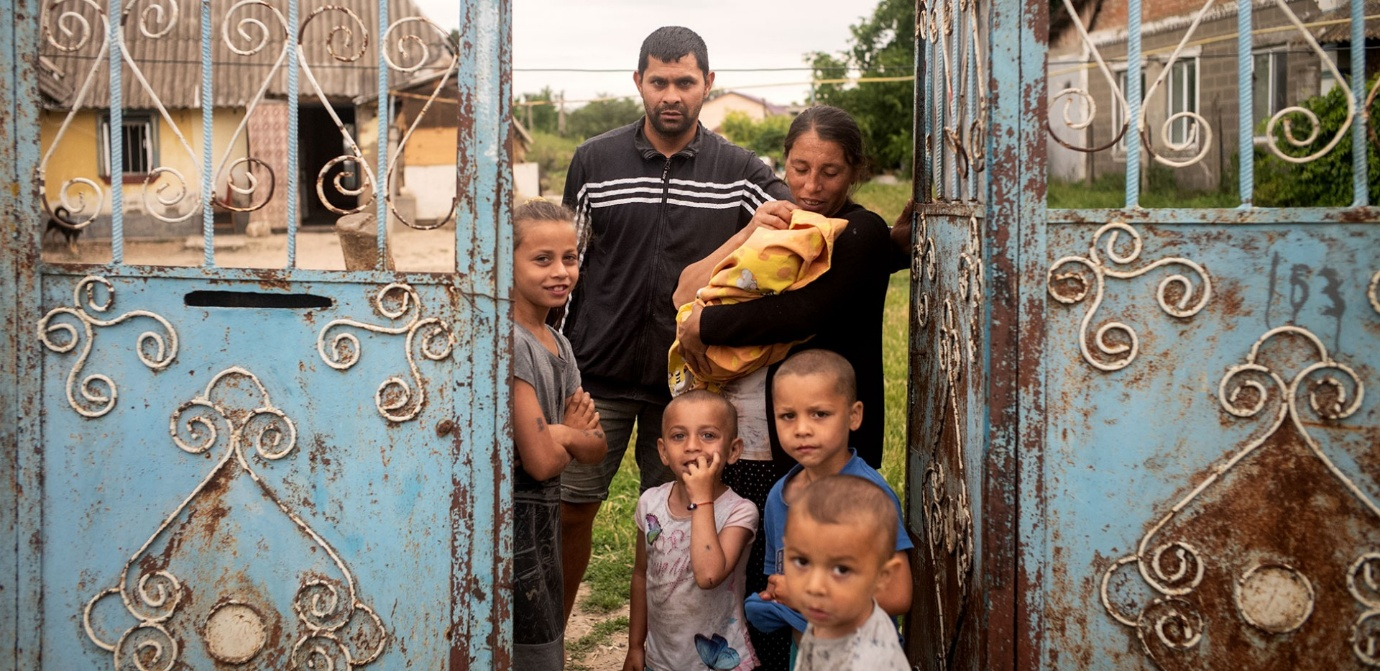
By prioritizing disaggregation and equality relevant metadata, these partnerships improve visibility and policy relevance for Roma and other ethnic minorities, minority linguistic communities, persons with disabilities, children, and people at risk of discrimination or ill treatment. In the Republic of Moldova, enhanced census variables and targeted indicator sets on health, education, social security and protection from torture support evidence informed interventions—from disability inclusive health service planning to anti discrimination measures, and monitoring of prevention of ill treatment in places of detention. The emphasis on accessible dissemination and returning information to communities also strengthens accountability and trust.
To consolidate gains and extend the impact of these MoUs, the parties to these agreements, working in collaboration with OHCHR, can:
redouble efforts to formalize the data sharing pipelines that allow integration of civil society data into official statistics
continue designing, validating and adopting dedicated indicator sets on specific topics, such as education, social security or prevention of torture
expand training on HRBAD for both NSO and NHRI staff, building national capacity and institutionalizing the ability to deliver such training regularly, including training on ethics, consent and disaggregation for small populations that accords with confidentiality and data security principles.
Countries can learn from the experiences of these pathfinders, and OHCHR can facilitate new partnerships to bring these benefits to a broader range of stakeholders throughout the region.
By formalizing cooperation through MoUs, these pioneering statistical offices and national human rights institutions in the UNECE region are beginning to turn principles into practice: building joint methodologies, improving disaggregation, and opening responsible channels for harnessing the potential of citizen data. These partnerships are strengthening national capacities to monitor SDG progress with a human rights lens, ensuring that data meaningfully reflect the experiences of those most at risk of being left behind—so that policies can close the gaps that matter most.
United Nations Economic Commission for Europe
Palais des Nations, Geneva


