

Gender-based violence (GBV), including sexual violence against women and girls, remains one of the most pervasive human rights violations rooted in unequal power relations and reflecting harmful social norms. In the context of rapidly expanding digital spaces, technology-facilitated gender-based violence (TFGBV) has emerged as an additional and increasingly harmful dimension of abuse, disproportionately affecting women and girls. UNFPA in Georgia, in line with its global mandate, works to create a world free from all forms of GBV—both on and offline.
TFGBV is an emerging form of violence and is often dismissed as being less serious than violence occurring offline. Because it takes place behind the screens and devices, its emotional, psychological and social impacts are frequently underestimated. Yet for many survivors, digital violence is deeply personal, painful and long-lasting. Globally, 85 per cent of women reported witnessing digital violence and nearly 40 per cent have experienced it personally19.
19
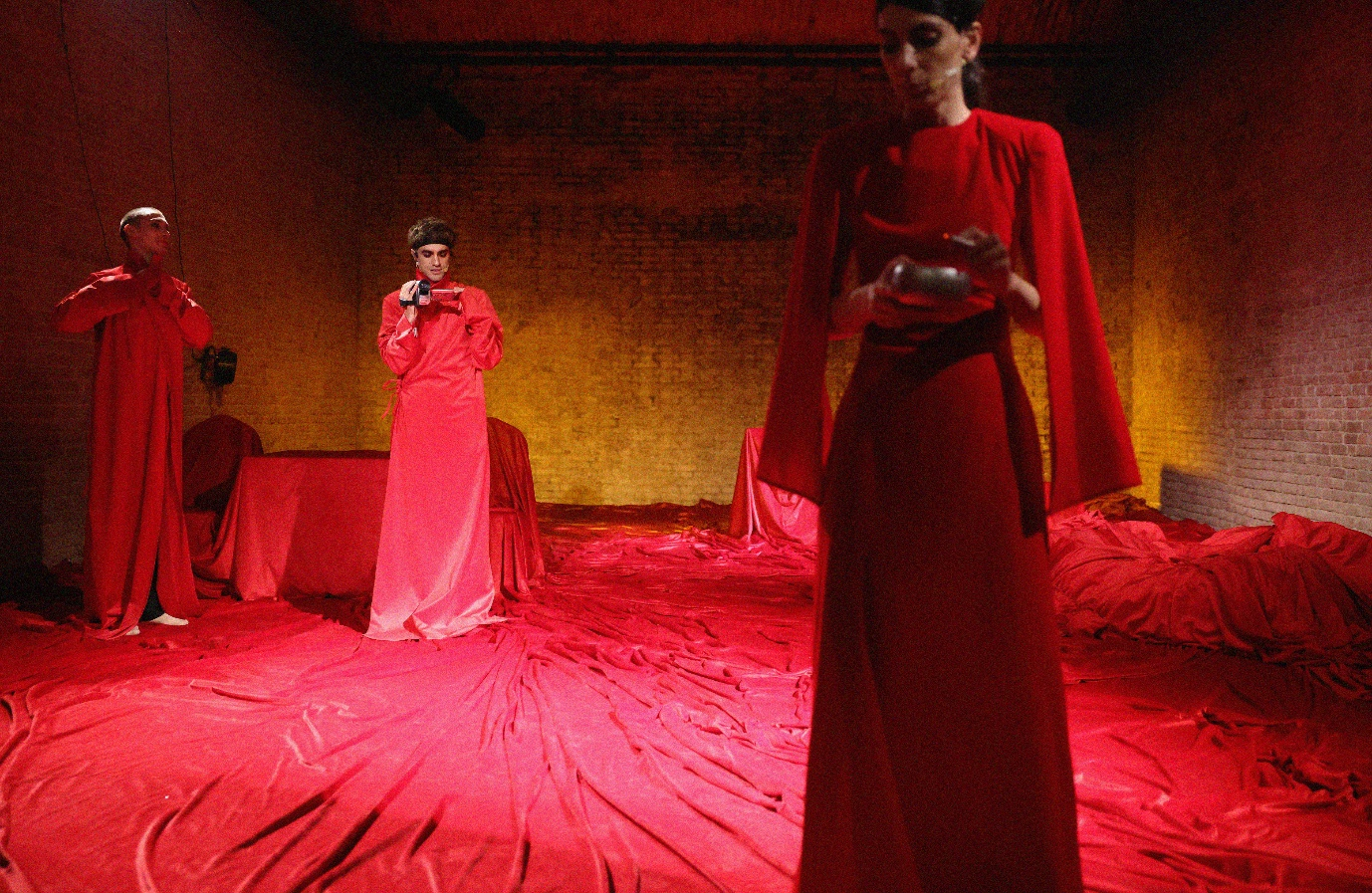
To build a society where everyone can live free from violence, UNFPA works through partnerships to reach diverse audiences, especially young people as key transformative agents of social norms and positive change. This is what inspired UNFPA to create the Virtual is Real Monologues - a series of theatrical pieces developed as part of its bodyright campaign in partnership with a creative group at an independent theatre company Haraki, Georgia. The aim UNFPA set for the project was to give voice to lived experiences that too often remain invisible.
The concept was simple but powerful: to collect real documentary cases of TFGBV—court rulings, media reports and survivor testimonies from civil society organizations working on the issue--and transform them into stories and monologues. Each monologue represents a different manifestation of TFGBV through distinct perspectives, including those of the survivor, the perpetrator and the relatives of those affected. This multi-angle approach allows the audience to understand the issue and the complexity. The performances capture the emotions surrounding the invisible pain, injustice, solidarity and resilience—giving voice to those directly or indirectly impacted by violence in virtual spaces. Through these narratives, the project underscores UNFPA’s focus on TFGBV, emphasizing that “virtual is real.”
Prominent writer Tamta Melashvili, who worked on the text of the monologues, believes that in the contemporary tech-directed world, art can touch upon such realms that no other medium can encompass. “Literature and theatre are the best mediums to talk about digital violence and to bring this problem close to people's hearts. Theatre is an immediate medium and, besides the spoken word, there are visual and other aspects—enabling the instant delivery of the message to the audience,” she says.
Indeed, the selection of a theatre as a medium was intentional. Unlike statistics or policy briefs, theatre establishes an immediate rapport with the viewer and has the power to make complex issues easily understandable and relatable. Research consistently shows that people remember emotions long after they forget facts, making emotional engagement a compelling way to confront a form of violence that is often minimized because it takes place online. Theatre invites audiences to step into the emotional landscape of digital violence and helps bridge the gap between perception and reality. Through story and emotional connection, the monologues make visible what may otherwise have remained overlooked.
"I think that the play turned out to be extremely effective for reflecting, expressing and conversing on this important topic. This is an issue that, to some extent, concerns everyone in today's digital world, especially young women and it is a complex issue that is intertwined not only with one woman but with many layers and people and realizing this, understanding it and talking about it is both important and necessary,” Tamta Melashvili adds.
Director Ilia Korkashvili also notes the importance and relevance of the play in the era of digital technologies and devices, which sadly also exerts negative influences on society. This project allowed him to get closer to the real stories of people who experienced GBV in various forms. It was also important and interesting for him how the documentary material was brilliantly transformed into a fictional text by writer Tamta Melashvili.
“Theatre is a synthetic art that combines many directions of art within itself. The most vital thing for theatre is the text; literature is the backbone of theatre, without which it cannot be realized. The art of theatre is alive; it unfolds in the present and this is precisely its power that impacts the audience. The stories told by the actors, which take place in real-time, in front of the audience, make the problem much more understandable and visible, giving the listener the opportunity to contemplate and perceive the scale of the issue,” Ilia Korkashvili says.
GBV served as a topic of creative process during yet another partnership with Haraki Theatre. Drawing inspiration from the myth of Persephone, the award-winning play by a local female artist Anastasia Chanturaia, examines how childhood experiences shape emotional perception and the journey of becoming a woman. At the centre of the play is a female protagonist, who frames the entire piece as a gender-sensitive observation of the contemporary world.
The performance offers a fresh female interpretation of the well-known story of Persephone from the Ancient Greek mythology and explores themes such as the sudden loss of childhood innocence, sexual violence and challenges to autonomy, internal transformation and reclaiming one’s identity. The play guides the audience through Persephone’s metamorphosis into the queen of the underworld, symbolizing the painful, yet empowering, process of womanhood—a journey of survival, resilience and self-discovery.
By working with creative spaces, by diversifying and strengthening its voice through drama and literature, UNFPA in Georgia managed to make both traditional and technology-facilitated manifestations of abuse more visible, fostering public awareness, empathy and collective responsibility to challenge violence against women and girls in all its forms.
United Nations Economic Commission for Europe
Palais des Nations, Geneva


