


Electrification is increasingly recognized as a cornerstone of green transition, providing an effective pathway to meet the growing energy demand while ensuring affordability, reducing emissions, improving energy efficiency and integrating renewables. In so doing, it establishes a solid foundation for deep decarbonization across all sectors to successfully meet climate and sustainability objectives.
The global transformation of energy systems is reshaping the electricity sector. Rising shares of renewables, electrification of transport and heating, along with the proliferation of distributed energy resources (DER), are creating new complexities in operations, especially at the grid edge. SDG 7 calls for “access to affordable, reliable, sustainable and modern energy for all”. Amid the current digital transformation trend, its targets 7.1 (universal access), 7.2 (increase renewable share) and 7.3 (improve energy efficiency) often hinge on systems that can anticipate variability and optimize operations in real time.
By enabling real-time monitoring and innovative solutions, digital transformation supports developing necessary capacity and intelligence to manage and harness electrification for achieving SDG-aligned green transition:
1. Efficiency and cost reduction: digital technologies enable predictive maintenance, decentralized energy management, including hybrid systems and low-emissions mini-grids. These technologies allow creating tailored applications that reduce energy losses, enhance reliability, increase durability and improve access and affordability of energy services, especially in underserved areas and fragile settings.
2. Evidence-based policymaking: availability of high-quality, reliable and accessible online data monitoring platforms supports policymakers plan, implement and track policy interventions more effectively. Digitalization also strengthens coordination across sectors, increases transparency and supports investment by building trust and accountability.
3. ESG (Environmental, Social, Governance) frameworks: digitalization opens avenues for ESG participatory governance, integrated service delivery and institutional strengthening across the three pillars of sustainability. It facilitates harmonized data collection and management among enterprises as well as across government agencies. This ensures that transparency is anchored in principles of cybersecurity, data privacy and interoperability as well as alignment with the SDGs.
To unlock the full potential of digitalization, it must be systematically integrated into national energy strategies. Digitalization should also be anchored in regulatory harmonization to ensure alignment with emerging international regulatory trends shaping electricity trade in the energy system transformation. Artificial Intelligence (AI) offers powerful tools to meet challenges in the broader electricity access context. By leveraging big data, machine learning and predictive analytics, AI can improve forecast demand and renewable output as well as address threats, such as cybersecurity risks, enabling grids to integrate clean energy reliably and affordably. However, these benefits come with risks, including data privacy concerns and exacerbating digital divide, which could undermine trust and equity if left unaddressed.
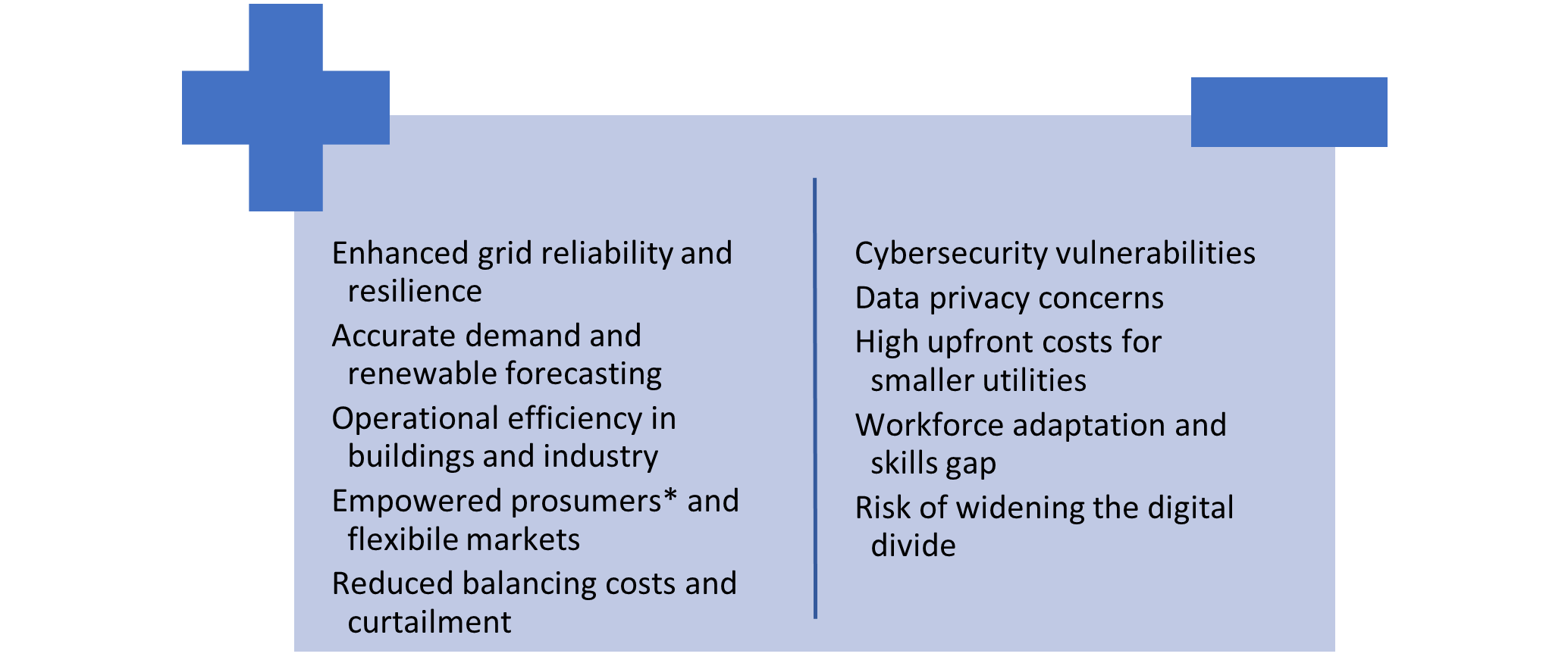
Power grid operators historically relied on deterministic models which were built and evolved over decades. These legacy infrastructures—both hardware and software--performed well under stable conditions. However, in today’s volatile environment with changing consumption patterns—such as EV charging, rising data center demand and telecommuting—combined with unpredictable climate events, such as heatwaves and storms, place growing pressure on electricity systems. At the same time, increasing renewables, integration of DERs and emergence of prosumers adds complexity to grid balancing, causing existing infrastructures to struggle.
Maintaining reliability under these conditions often requires costly operational reserves and curtailment of renewables, contradicting the emissions-reducing goals. Smaller utilities and emerging markets face additional barriers, such as limited digital infrastructure, lack of skilled workforce and relatively high upfront costs.
UNECE has positioned systemic efficiency, defined as coordinated optimization of energy production, distribution and consumption, as the key organizing principle for energy systems digital transformation.
Key actions include:
• Policy and governance frameworks: recommendations on digital, particularly AI governance, interoperability and cybersecurity for critical energy infrastructure.
• Case studies and cutting-edge research: AI applications analysis, including in load forecasting and short-term demand prediction for optimizing renewable-based DER and smart building management.
• Capacity building: workshops and dialogues connecting policymakers, industry and academia to share best practices on digital transformation, optimization and bridging gaps between research, innovation and policy needs.
• Regional and global platforms: UNECE leads the UN-Energy Priority on Digitalization, creating multi-stakeholder partnerships and knowledge-sharing mechanisms to scale AI solutions across regions.
• Transformative innovation policy and AI: UNECE identified key actions to harness AI for energy systems: (1) promote open-source data and modelling to boost collaboration and transparency; (2) establish strong governance frameworks to build trust and accelerate AI adoption; and (3) mandate reporting and disclosure of energy use in data centers.
These efforts are complemented by projects such as the one from the 18
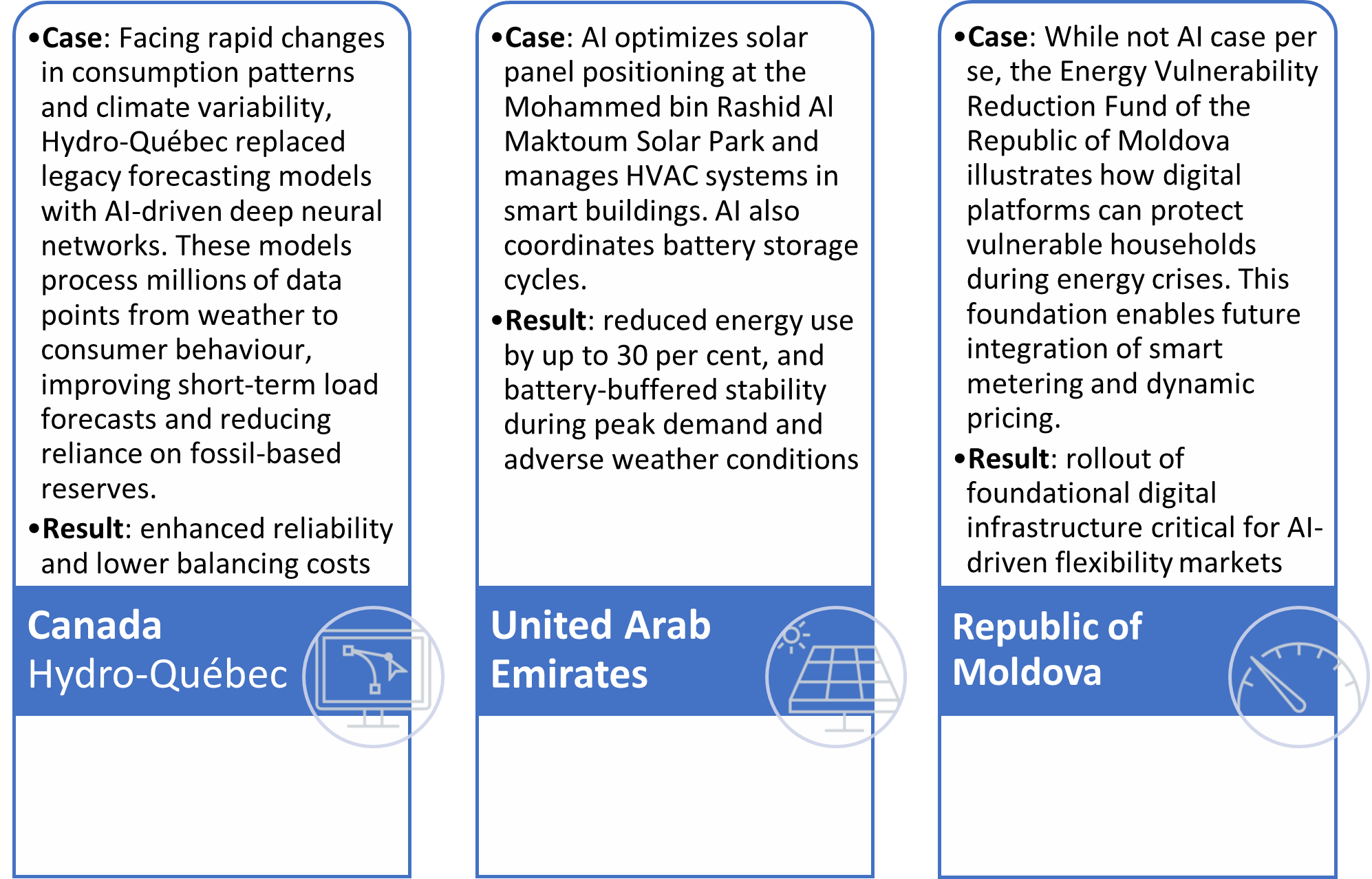
AI-driven forecasting and optimization deliver tangible benefits:
Enhanced reliability: reduced forecasting errors and improved scheduling;
Higher integration of renewable-based DER: more accurate prediction of solar and wind patterns, reducing curtailment;
Operational efficiency: smart building systems lower energy use and emissions taking account of user behaviour patterns.
However, challenges remain: workforce adaptation and cybersecurity are critical bottlenecks, and smaller utilities risk being left behind without targeted support. Digitalization must be inclusive, interoperable and cybersecure to avoid further reinforcing digital divide. Moreover, AI models demand massive computational power,increasing energy use and emissions. Improving energy efficiency in AI is essential, while data centres’ need for reliable access to electricity calls for innovations that better integrate intermittent renewables and leverage waste-heat recovery and other industrial symbiosis solutions.
AI is one of the strategic technological choices to support systemic efficiency. By anticipating energy needs and optimizing flows, it reduces costs, enhances resilience and accelerates decarbonization. UNECE facilitates the sharing of these benefits across the region, fostering cooperation, innovation and inclusivity. As digital and green transitions converge, AI-driven energy systems exemplify how technology can serve people and the planet, turning complexity into opportunity for a sustainable energy future.

United Nations Economic Commission for Europe
Palais des Nations, Geneva


