


Ukraine is facing a severe demographic crisis with direct consequences for progress across the 2030 Agenda. Since 2014, the country’s population has declined by an estimated 10 million people and fertility has fallen below 1.0 children per woman. As of the end of 2025, more than 5.9 million Ukrainians remain abroad and 3.7 million are internally displaced. This is not an abstract population trend: it changes who is available to work, where people live and whether communities can sustain schools, clinics and basic services—all core conditions for sustainable development.
As large numbers of people are displaced or living outside the country, labour markets tighten, service delivery becomes uneven and local economies struggle to maintain momentum. These pressures show up at community level as well, shaping whether towns and cities remain viable and inclusive (SDG 11) and whether health and well-being can be protected in practice (SDG 3).
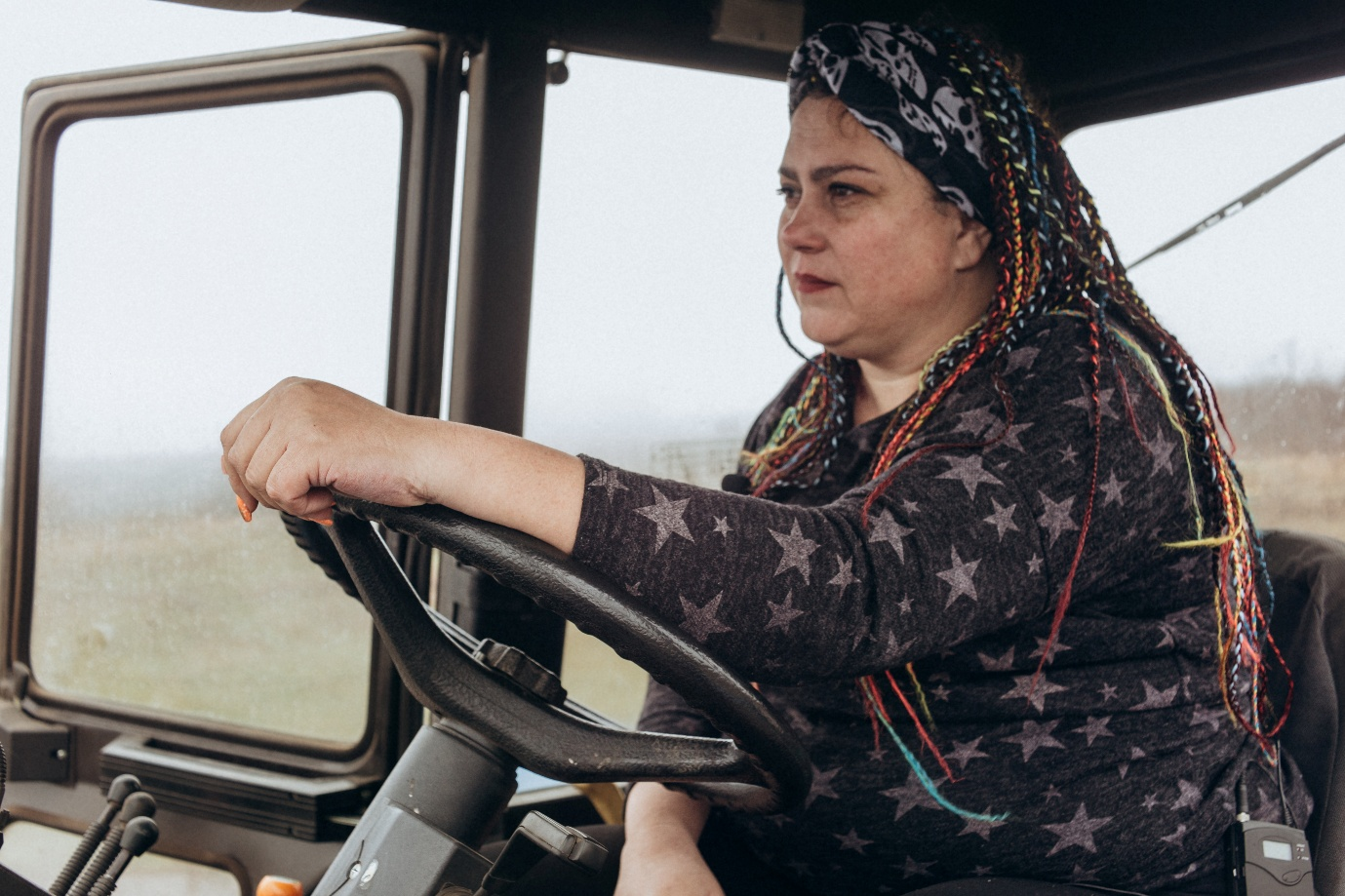
Gender equality is a core part of demographic resilience. Ukraine’s recovery depends on women being able to participate in economic life, including entering into traditionally male-dominated sectors during wartime. It also depends on women and girls being safe and free from violence, because participation in work and public life requires safety. These are enabling conditions for SDG 5 and for sustaining recovery in communities under strain.
A second enabling condition is reliable population data. Recovery and development planning depends on accurate, timely and disaggregated demographic information, yet under martial law a traditional population census is not possible. Strengthening national data systems and data partnerships (SDG 17.18) becomes essential for evidence-based policymaking—supporting decisions that affect access to services, local planning and allocation of resources.
UNFPA is supporting the Government of Ukraine maintain and modernise population data systems through approaches adapted for wartime conditions. In partnership with the State Statistics Service of Ukraine (SSSU), UNFPA is supporting the transition towards digital data collection and the development of official wartime population estimates using non-traditional methods. This will enable the production of the first official population estimates since February 2022, creating a critical evidence base for national planning and laying groundwork for a future register-based statistical system.
The same data gap affects humanitarian response. Since 2023, UNFPA has supported humanitarian coordination through the Common Operational Dataset on Population Statistics (COD-PS), described as the best available population data for humanitarian response in the absence of official statistics. The COD-PS draws on non-conventional sources, including mobile operator data and National Health Service administrative data used as population proxies, to support needs-based planning and coordination across humanitarian actors.
UNFPA’s support to the SSSU also includes capacity building for modern survey methods that can function during wartime. This includes consultancy, methodological support and equipment to establish a Computer-Assisted Telephone Interviewing (CATI) call centre within the SSSU, enabling the continuation of household surveys and preserving critical data flows on socio-economic conditions and population dynamics. UNFPA is further supporting to scale up CATI and support a transition to a web-first (“push-to-web”) data collection in 2026, alongside supporting a statistical population register that could later serve as the foundation for a register-based census.
Demographic pressures are felt sharply at municipal levels where population changes affect service demand and the ability to sustain local institutions. UNFPA is supporting local actors with population intelligence to strengthen planning and decision-making, including through the Municipal Youth Well-Being Index (YWBI) platform. The YWBI enables municipalities assess the living conditions, needs and aspirations of young people, monitor youth development indicators and track policy effectiveness over time. Its methodology has been updated to reflect the war context, with an aim to support 40 municipalities apply the platform by 2029. UNFPA is also developing local population projection tools for municipalities to forecast future demand for healthcare, education and social services and support more sustainable and inclusive planning.
Ukraine’s demographic trajectory also requires long-term policy responses that work across sectors. UNFPA provided technical support for the development and adoption of Ukraine’s National Demographic Strategy until 2040, which was approved by the Cabinet of Ministers in September 2024, alongside the first Action Plan for 2024–2027. This Strategy marks a shift towards a broader demographic resilience approach, integrating human capital development, quality of life, human rights and social inclusion. Key pillars include family-friendly policies and childcare support; reducing premature mortality; increasing labour market inclusiveness (including integration of internally displaced persons); promoting active ageing; and supporting return migration and reintegration of Ukrainians abroad. UNFPA continues to support implementation through technical assistance, evidence generation and stakeholder engagement, including through advocacy.
Taken together, this work connects the immediate demands of wartime governance with long-term development goals: modernising data systems to support decisions; developing municipal tools to keep communities functioning and inclusive; and supporting national demographic planning that treats resilience as a whole-of-society issue.
United Nations Economic Commission for Europe
Palais des Nations, Geneva


