

From Nisporeni to Sipoteni, from Puhăceni to Sărata Veche, local authorities, hometown associations and diaspora networks are working together to redesign public services, strengthen social cohesion and create opportunities at home. These collaborative efforts are supported by UNDP and UNFPA through projects implemented under the Swiss Cooperation Office Programme "Moldova - Making the most of migration," in partnership with the State Chancellery and the Bureau for Diaspora Relations of the Republic of Moldova.
In late 2024, ten local public authorities were selected through a competitive process to participate in an ambitious UNFPA supported program focused on effective public policies and transparent budgeting. Each locality received a 15,000 USD in grant as well as access to training and technical tools, including AI-driven solutions, to support the translation of population data into sustainable, people-centered and needs-based policies and solutions.
This effort builds on a national breakthrough achieved in 2024: with UNFPA support, the Government of Moldova institutionalized demographic forecasting at both the national and local levels. As a result, population forecasts are prepared annually at the national level and every three years at the territorial level, providing authorities with essential data for strategic planning and sustainable development.
One of the selected localities, the city of Nisporeni, faces challenges familiar to many Moldovan communities: declining birth rates, youth migration and an aging population. Until now, development planning often relied on estimations rather than on disaggregated data.
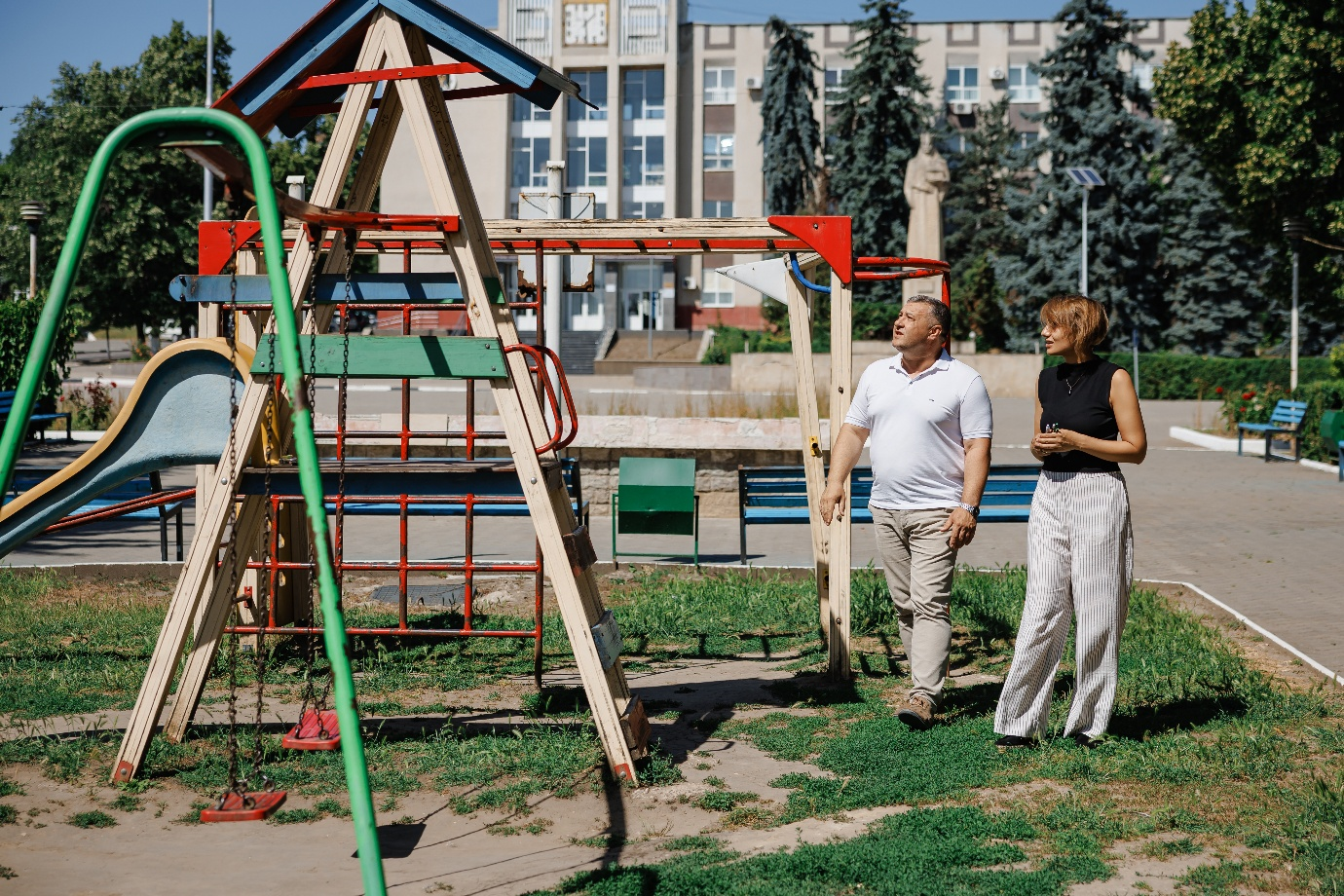
Following consultations with residents, the municipality chose to transform the long-abandoned Kindergarten No. 4 into a multifunctional center. The need was clear: families reported insufficient access to modern social and educational services, particularly for children with special educational needs (SEN). While Nisporeni lacks its own data on children with SEN, regional figures show 309 children with special needs enrolled in schools and preschools across the district.
The grant will finance the feasibility study and technical documentation needed to unlock the national and European funding for services such as speech therapy, psychology, neurology, an inclusive kindergarten and a “Respiro” center for parents of children with disabilities.
By May 2026, Nisporeni and the other 14 selected municipalities aim to expand these models to sectors including health, education and urban planning. In the long run, the city aims to develop a demographic monitoring system integrating administrative, participatory and digital tools — including GIS maps and AI-powered analysis — to better target investments and justify decisions to the local councils and citizens.
Nisporeni is part of a broader landscape of local transformation. Across Moldova, another 20 communities are implementing inclusive development initiatives with support from UNDP. Twenty hometown associations (HTA) received a 9,000 USD in grant each to work with local authorities on community-led solutions. The results are already visible:
In Cotiujenii Mari, a new day centre now supports older residents.
In Sărata Veche, children with special education needs benefit from expanded therapy and educational services.
In Nimoreni, 400 new waste containers improved community sanitation.
In Sipoteni and Puhăceni, newly installed accessibility ramps allow persons with disabilities, parents with strollers and older adults to participate equally in community life.
These achievements build on many years of cooperation and partnership that led to improved living conditions in over 120 communities, benefiting more than 500,000 people.
Another key intervention implemented by UNDP focuses on strengthening the organizational and community-mobilization capacities of hometown associations nationwide. Through the “Next Level” capacity-building programme conducted by the CSO Alliance of Hometown Associations with support from UNDP and Switzerland, 30 HTAs and 20 representatives of local public authorities received training and mentorship during 2024-2025. The programme focused on strenghthening competencies in project management, good governance, fundraising, community mobilization and diaspora engagement. The programme has already generated compelling success stories in communities including in Sireți, Cărbuna, Puhăceni, Scoreni, Pelinia and Sipoteni.
Complementing these community-focused initiatives, UNDP works with the Congress of Local Authorities from Moldova (CALM) and the State Chancellery to strenghthen the essential role of local migration focal points, helping to ensure that returnees, migrants and diaspora partners remain connected to local development. The results of a comprehensive assessment carried out in 80 communities on evaluating the functionality of existing migration focal points is informing now the updated profiles and Terms of Reference for migration focal points, capacity-development modules and improved coordination mechanisms.
From demographic forecasting to inclusive playgrounds, from data-driven investments in Nisporeni to community-led projects in dozens of villages, one message is clear: local development works best when it is grounded in facts, shaped by citizens and supported by strong partnerships.
United Nations Economic Commission for Europe
Palais des Nations, Geneva


